How Third-Party Data Partnerships Are Quietly Reshaping Real-Time Risk Management Tools Inside State-Licensed Wagering Apps
Wendy Neumann · May 27, 2026

How Third-Party Data Partnerships Are Quietly Reshaping Real-Time Risk Management Tools Inside State-Licensed Wagering Apps
State-licensed wagering apps now rely on external data streams that feed directly into their risk engines, and observers note how these connections have expanded since early 2025. Partnerships with analytics firms, weather services, and transaction processors supply continuous inputs that adjust odds, flag suspicious patterns, and set dynamic bet limits without manual intervention from operators.
Data Sources Driving the Shift
Third-party providers deliver granular information that includes player location histories, device fingerprints, and live event variables. Research from the American Gaming Association shows these feeds reduced response times for anomaly detection by measurable margins in multiple jurisdictions during the first quarter of 2026. Operators integrate the data through APIs that push updates every few seconds, allowing systems to recalculate exposure across thousands of active wagers simultaneously.
Weather data partnerships stand out because sudden changes at outdoor venues can alter injury risks and scoring projections in real time. Companies such as those supplying meteorological models now connect straight to sportsbook backends, and the result appears in adjusted lines that reflect field conditions minutes after they develop. Transaction monitoring services add another layer by cross-referencing payment patterns against known fraud databases maintained by international clearinghouses.
Real-Time Risk Tools in Operation
Inside the apps themselves, risk management modules evaluate incoming bets against aggregated profiles built from multiple external sources. When a new wager arrives, the system checks it against historical behavior tied to the same device or account, then layers in contextual signals from third-party feeds. This process happens in milliseconds and determines whether the bet is accepted at full stake, reduced, or routed for additional verification.
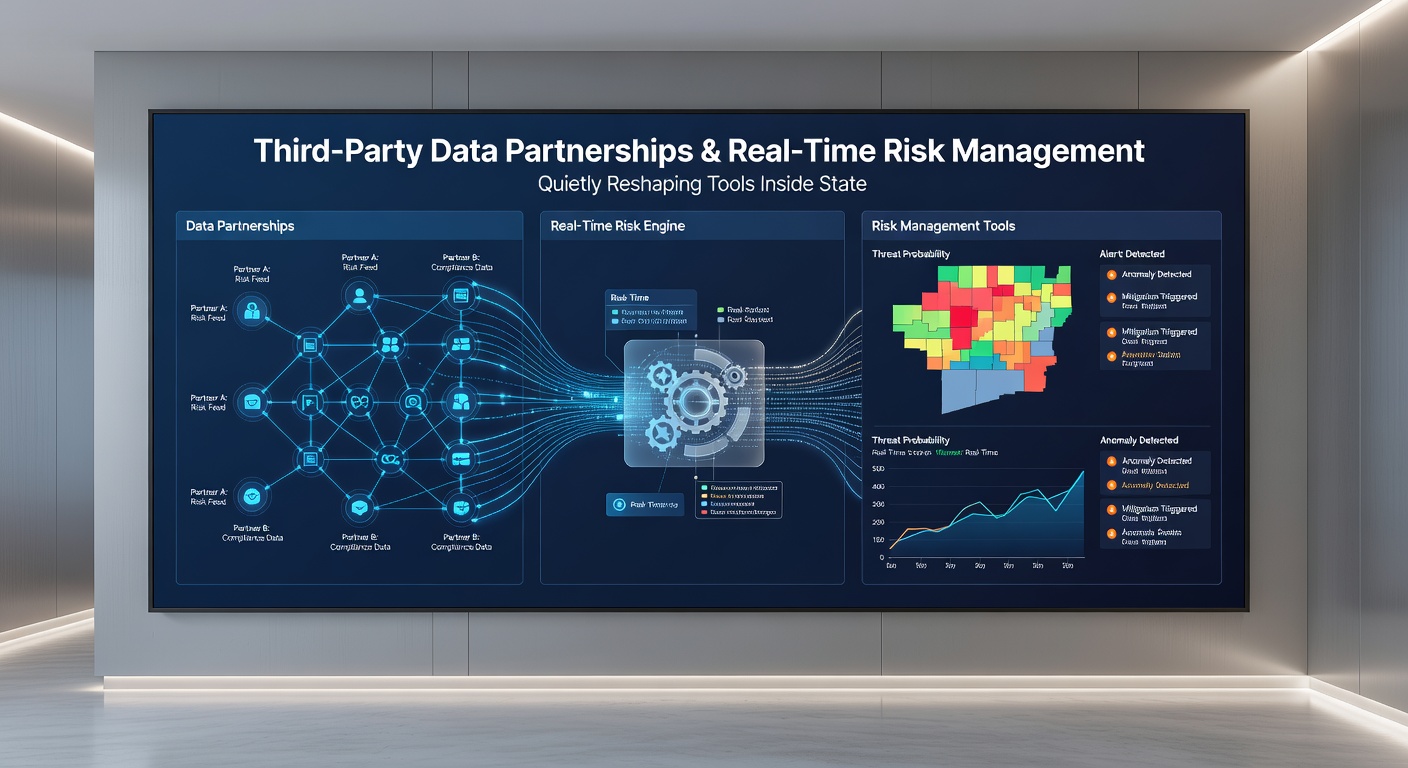
Figures released in May 2026 by several state regulators indicated that apps using these layered partnerships experienced fewer instances of large-scale bonus abuse compared with the same period in the prior year. The tools also support responsible gambling features by identifying rapid deposit sequences or unusual stake escalations that match patterns documented in academic studies on behavioral risk indicators.
Regulatory Context Across Jurisdictions
State licensing agreements increasingly require documentation of third-party data sources and their security protocols. Regulators in states such as New Jersey and Pennsylvania have examined how these partnerships affect audit trails, while authorities in Michigan and West Virginia have focused on data residency rules that keep certain player records within approved borders. Compliance teams now review API contracts alongside traditional financial reporting to confirm that external partners meet the same standards applied to the licensed operator.
One study released by researchers at the University of Nevada, Las Vegas examined how these integrations influenced hold percentages and found correlations between richer data inputs and tighter variance in daily settlement figures. The findings align with observations from Canadian provincial regulators who track similar technology deployments in their iGaming markets, although the specific data vendors differ by region.
Practical Effects on App Performance
Users encounter the results of these partnerships through faster settlement of cash-out requests and more precise live betting adjustments. When external data reveals an unexpected development, such as a key player warming up on the sideline or a payment method flagged in another jurisdiction, the app can pause or modify the available options without interrupting the overall session. Operators report that these changes occur behind the scenes while the interface remains stable for the end user.
Partnerships with identity verification services further tighten risk controls by supplying real-time address and age checks drawn from public records and credit bureaus. This reduces reliance on manual document uploads during high-volume periods such as major sporting events, and it supports the continuous monitoring required under state rules updated through 2026.
Conclusion
Third-party data partnerships continue to supply the inputs that power real-time risk management inside state-licensed wagering apps. As integration deepens, operators gain granular visibility into player activity and event variables while regulators maintain oversight through documented data flows. The pattern established by mid-2026 points toward further expansion of these connections across additional jurisdictions and product types.