How Interstate Tax Protocols Reshape Net Payout Calculations During Mobile Session Transfers Across Licensed Platforms
Alex Hayes · Jul 22, 2026

How Interstate Tax Protocols Reshape Net Payout Calculations During Mobile Session Transfers Across Licensed Platforms
Interstate tax protocols create layered adjustments to net payouts when users move between state jurisdictions during active mobile wagering sessions, and operators must recalculate withholding rates based on the user's current location at the moment of settlement. These protocols operate under frameworks established by individual state legislatures, where tax rates on winnings range from 0.25 percent in some markets to over 50 percent in others, and the shift occurs automatically through geolocation verification systems embedded in licensed apps.
Core Mechanisms Behind Location-Based Tax Adjustments
State regulators require platforms to detect user movement across borders in real time, which triggers a recalculation of applicable taxes before any funds reach the user's account, and this process relies on GPS data combined with IP address checks that update every few minutes during live sessions. When a session transfers from one licensed platform to another, the originating state's tax rules may still apply to the initial stake while the destination state's rates govern the final payout, creating a hybrid calculation that operators handle through middleware systems designed for multi-jurisdictional compliance.
Research from academic institutions shows that these hybrid models emerged after 2018 when multiple states legalized online sports betting, and data indicates the number of active interstate transfer events rose steadily through mid-2026. In July 2026, updated protocols in several border states introduced mandatory pre-transfer tax previews that display projected net amounts before users confirm a move between platforms.
Recalculation Processes During Active Transfers
Operators apply a sequence of steps that begins with locking the session's original tax rate, then overlays the new jurisdiction's requirements once the user crosses state lines, adn this sequence can reduce or increase the final net amount by several percentage points depending on the states involved. Payout formulas incorporate both federal withholding requirements under IRS guidelines and state-specific levies, which means a single winning ticket might face sequential deductions when the mobile session spans multiple regulatory zones.
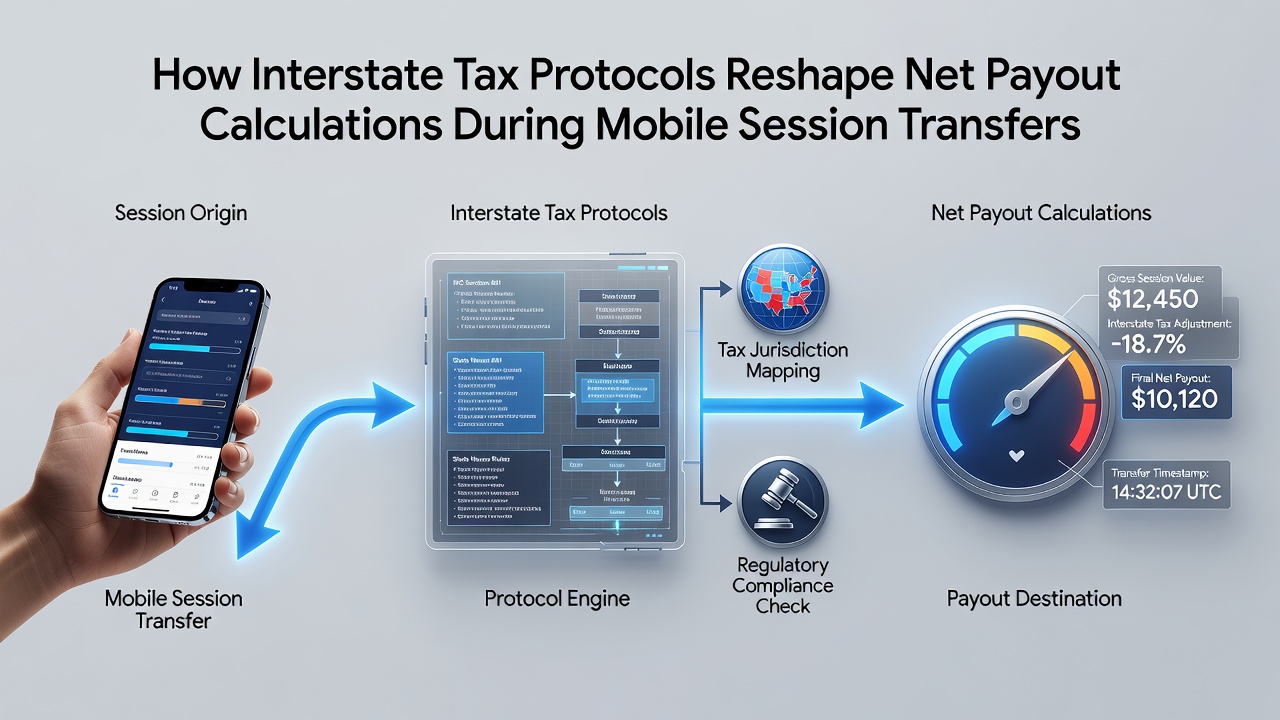
Those who've examined platform logs note that automated systems flag transfers exceeding certain thresholds for manual review, while smaller movements process instantly through the same tax engines that manage daily settlements. Figures from industry reports reveal that average net payout reductions during cross-border transfers reached 8 to 12 percent in states with higher marginal rates during the first half of 2026.
Platform-Level Implementation Across Licensed Markets
Licensed operators maintain separate ledgers for each jurisdiction they serve, and when a mobile session transfers, the system posts the winnings to the destination ledger before applying the corresponding tax schedule. This approach prevents double taxation in most cases, although residual fees for currency conversion or account reconciliation can still appear on statements when users move between platforms operated by different companies.
According to data published by the U.S. Department of the Treasury, federal reporting thresholds remain consistent nationwide even as state rules diverge, which simplifies some aspects of compliance while leaving operators responsible for tracking location-specific withholdings. Platforms in states with reciprocal agreements share user location histories through secure APIs, allowing faster processing of transfers that would otherwise trigger repeated verifications.
Examples of Net Payout Changes in Practice
Take one documented case where a user initiated a wager in a low-tax state and completed settlement after crossing into a higher-tax jurisdiction: the original 4 percent state levy gave way to an 11 percent rate, and the platform deducted the difference directly from the pending payout within the same mobile session. Similar patterns appear in data sets from operators serving the Northeast corridor, where frequent travel between states creates repeated recalculation events each month.
Another instance involved a partial cashout executed mid-transfer, and the split payout reflected two distinct tax layers applied to the same original stake. Observers note that these layered calculations now appear as line items on user statements, providing clearer visibility into how location changes affect final amounts received.
Regulatory Updates Effective in July 2026
Several states implemented refined protocols at the start of July 2026 that require platforms to issue real-time tax impact alerts before any session transfer completes, and these alerts display both the original and projected net figures side by side. The changes also mandate quarterly audits of transfer logs to confirm accurate application of each jurisdiction's rules, which has increased operational costs for multi-state operators while improving transparency for users.
Evidence from compliance reports indicates that the new alert systems reduced disputes over unexpected deductions by roughly 15 percent in teh initial weeks after rollout. Platforms continue to refine their geofencing boundaries to align with updated state maps that account for newly approved betting zones.
Conclusion
Interstate tax protocols continue to evolve as more states refine their regulatory approaches, and the resulting adjustments to net payout calculations remain a central feature of mobile session transfers across licensed platforms. Operators rely on integrated systems that track location changes and apply the correct rates automatically, while users encounter these effects most directly through updated statements and preview screens. The frameworks in place as of July 2026 reflect ongoing coordination between state agencies and platform developers to maintain compliance without disrupting the flow of mobile wagering activity.