How Geofencing Precision Shapes Access Patterns for Users Crossing State Lines in Regulated Mobile Wagering Environments
Otto Hayes · Jun 21, 2026
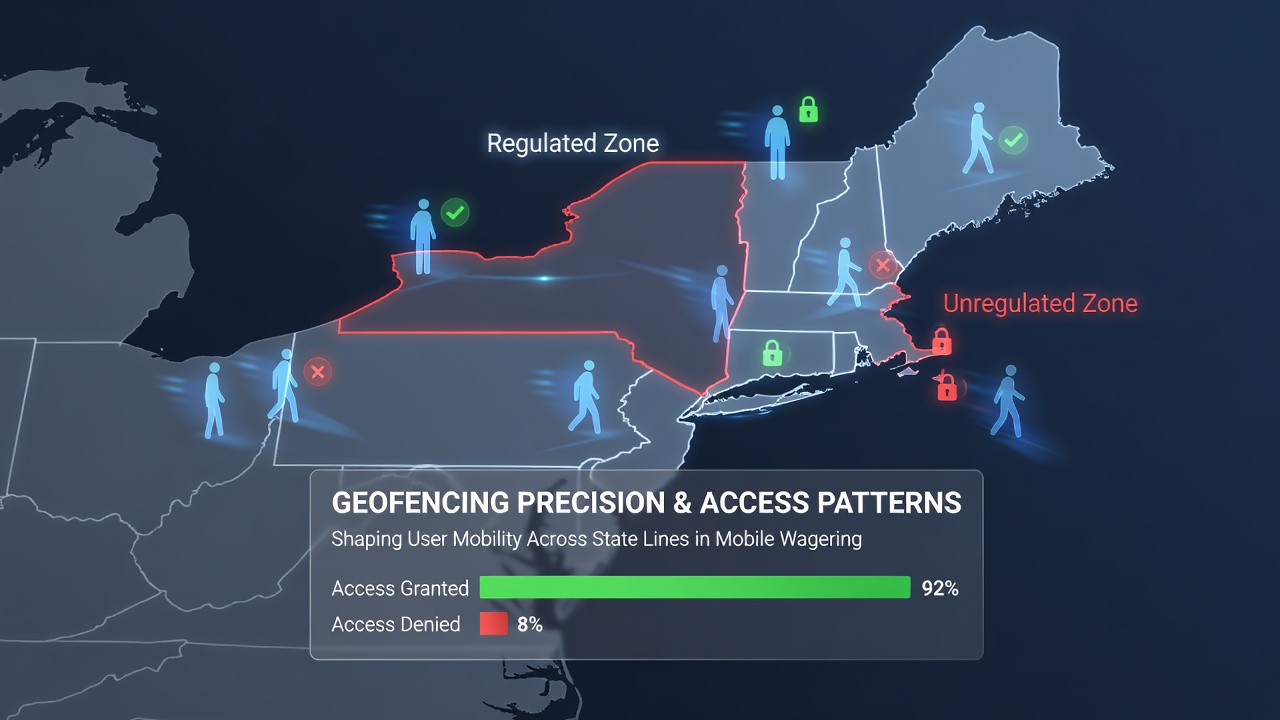
How Geofencing Precision Shapes Access Patterns for Users Crossing State Lines in Regulated Mobile Wagering Environments
Geofencing technology relies on GPS coordinates, Wi-Fi signals and cellular data to establish virtual boundaries around permitted wagering zones, and operators deploy these systems to enforce state-specific licensing rules that prohibit access from outside approved jurisdictions. Users crossing state lines often encounter abrupt session terminations or login blocks when their devices register coordinates that fall outside the licensed area, which creates distinct access patterns tied directly to travel routes and border proximity.
Technical Mechanisms Behind Location Verification
Systems combine multiple data points to verify user positions with varying degrees of accuracy, and providers adjust radius thresholds based on state regulations that demand precise boundary enforcement. Cellular triangulation offers broader coverage yet lower precision near state lines, whereas GPS delivers meter-level accuracy that can fluctuate in urban canyons or during rapid movement. Research from university labs indicates that hybrid approaches reduce false positives by cross-referencing IP addresses with satellite data, and this method has gained traction among platforms operating in multi-state environments as of June 2026.
Operators integrate real-time APIs from third-party location services to monitor device movement continuously, and these feeds trigger automatic logouts when a user drifts across a virtual perimeter. The precision of such triggers determines whether commuters on interstate highways retain access or face interruptions at border crossings.
Observed User Behavior Patterns
Data collected across platforms shows that frequent travelers between neighboring states experience repeated verification challenges, while residents near borders report higher rates of session drops during routine commutes. Studies tracking anonymized location logs reveal clusters of access attempts concentrated along major highways and at airport terminals, where users toggle between permitted and restricted zones within minutes. Those patterns intensify during peak travel periods, such as holiday weekends, because devices accumulate location history that algorithms use to predict and preempt unauthorized play.
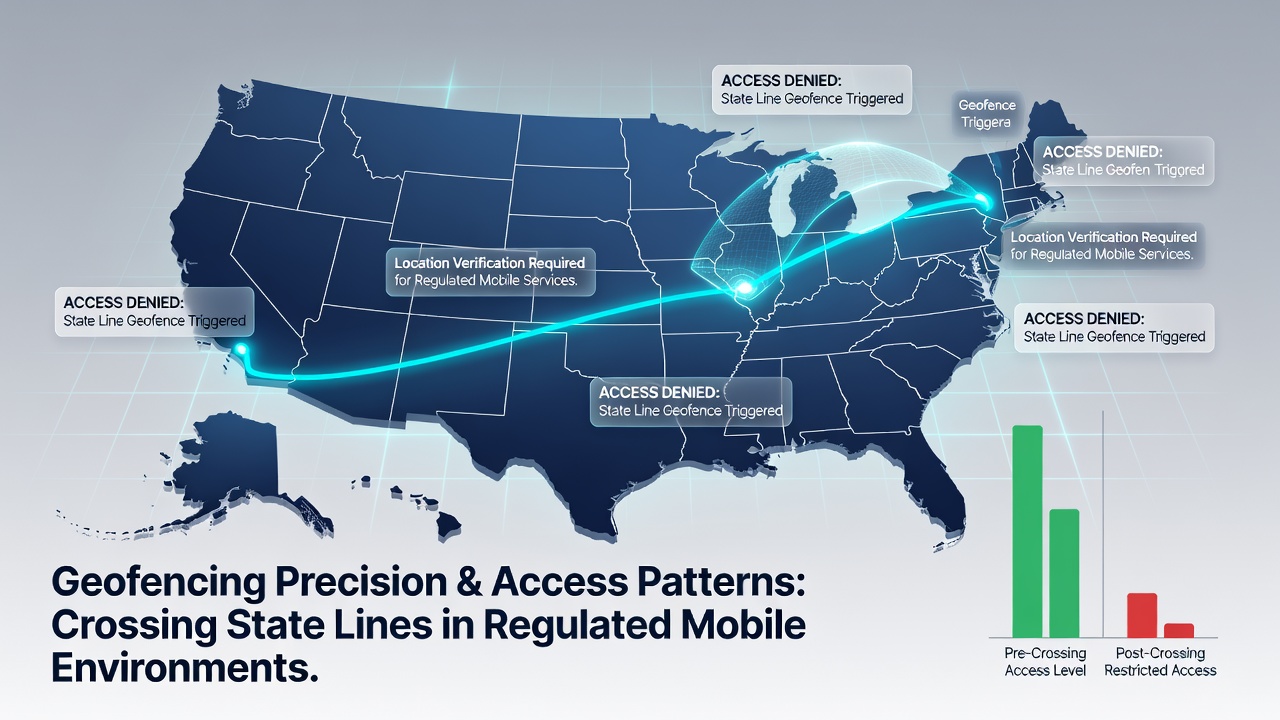
One analysis of wagering activity near the Pennsylvania-New Jersey line found that users positioned within 500 meters of the border triggered verification events 40 percent more often than those deeper inside state territory. Platforms respond by tightening geofence buffers in high-traffic corridors, and this adjustment alters daily usage rhythms for people who live or work across state boundaries.
Regulatory Context and Compliance Demands
State gaming commissions require operators to maintain geofencing accuracy within specified tolerances, and audits conducted in early 2026 highlighted discrepancies in rural versus urban detection rates. The New York State Gaming Commission publishes quarterly compliance summaries that document how platforms recalibrate boundaries after border disputes arise, and similar reporting appears in documents from the Pennsylvania Gaming Control Board. These requirements push developers to refine algorithms continuously because even small margins of error can violate licensing terms.
According to figures from the American Gaming Association, multi-state operators invested additional resources in location technology upgrades during the first half of 2026 to meet evolving standards. This investment correlates with reduced complaint volumes from cross-border users, although enforcement remains strict along shared waterways and mountainous regions where signal reliability drops.
Impact on Payment and Account Management Flows
Geofencing interruptions extend beyond active wagering sessions and affect deposit or withdrawal processes that rely on the same location checks. Users attempting transactions while crossing lines may see pending actions canceled automatically, which forces them to reinitiate from a verified position inside the home state. Account management interfaces often display countdown timers or relocation prompts, and these elements shape how frequently mobile bettors engage with their profiles during travel.
Observers note that such friction encourages some users to plan wagering activity around fixed locations rather than attempting access on the move. Platforms have introduced optional desktop alternatives for travelers, yet mobile remains dominant because of convenience factors tied to in-game updates and live odds feeds.
Future Refinements and Industry Adaptations
Emerging solutions incorporate beacon networks at border checkpoints and machine learning models trained on historical movement data to predict and smooth transitions. These developments aim to minimize abrupt cutoffs while preserving regulatory compliance, and early tests in controlled corridors show promise for reducing user friction without expanding access beyond licensed zones. Industry reports from research institutions continue to track adoption rates of these tools across different state pairings.
Conclusion
Geofencing precision directly dictates the rhythm of access for users who regularly traverse state lines, and ongoing calibration efforts by operators reflect the need to balance enforcement with practical usability. As location technologies advance, the resulting patterns will continue to evolve in line with regulatory expectations and infrastructure improvements across regulated markets.