Exploring Synchronization Protocols for Cross-Platform Account Management in Multi-Jurisdictional Betting Systems
Otto Hayes · Jun 28, 2026

Exploring Synchronization Protocols for Cross-Platform Account Management in Multi-Jurisdictional Betting Systems
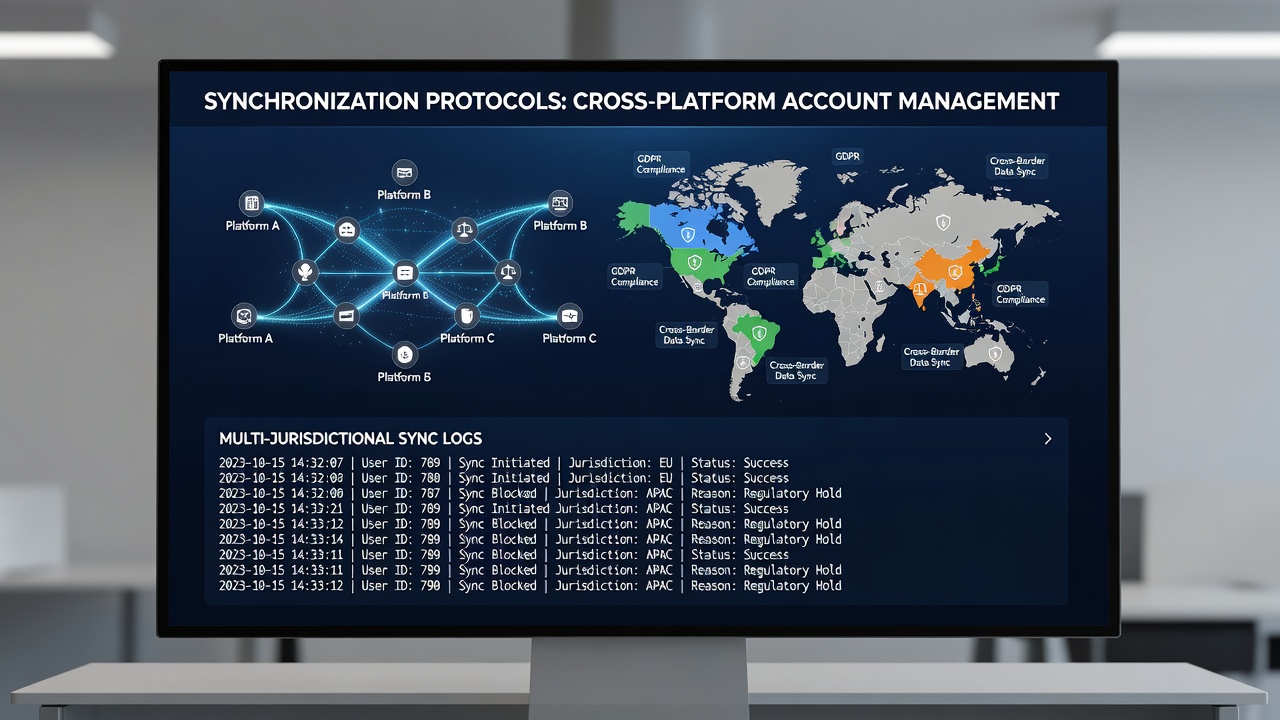
Operators managing accounts across different jurisdictions face constant pressure to keep user data consistent while meeting separate regulatory demands in each location. Synchronization protocols handle this by coordinating login credentials, balance updates, and compliance records in real time or near real time, and they rely on standardized authentication methods such as OAuth 2.0 combined with encrypted database replication. Data shows that states with active mobile wagering programs require operators to verify player eligibility instantly when accounts move between platforms. Researchers at the University of Nevada, Reno have documented how these systems use event-driven APIs to push changes in responsible gambling limits or self-exclusion status across state lines without creating delays that could violate local rules.Core Technical Components
Modern protocols combine several layers that work together. Identity federation allows a single set of credentials to function in multiple licensed environments, while conflict-resolution algorithms decide which version of an account record takes priority when two platforms update the same field at once. Observers note that operators often deploy message queues such as Apache Kafka to maintain an ordered log of every transaction, and this approach reduces the chance of duplicate bets or mismatched fund transfers.
Encryption standards like TLS 1.3 protect data in transit, and tokenization replaces sensitive identifiers with temporary values that expire after each session. Those who've studied these implementations report that hardware security modules store the master keys, and regular audits verify that no jurisdiction receives more information than its statutes permit.
Regulatory Alignment Across Borders
Each state sets its own requirements for age verification, tax reporting, and problem-gambling tools, so synchronization must filter or transform data before it crosses lines. In June 2026, several operators updated their systems after Pennsylvania and Michigan revised data-sharing agreements, and the changes forced new mapping rules for player status flags. According to figures released by the Nevada Gaming Control Board, synchronization errors dropped 18 percent after platforms adopted a unified schema for exclusion lists.
Multi-jurisdictional operators also track currency conversions and tax withholdings automatically. When a player places a wager from one state and requests a withdrawal in another, the protocol calculates applicable fees and withholds the correct amounts before any funds move. This automation keeps records consistent without manual intervention that could introduce human error.
Security and Fraud Prevention Measures
Fraud detection models run on synchronized data streams that combine betting patterns from every licensed platform a player uses. When an account shows unusual activity in one state, the protocol can pause access elsewhere until verification completes. Industry reports indicate that real-time sharing of device fingerprints and IP histories has reduced account takeover attempts by measurable margins since early 2025.
Zero-knowledge proofs are gaining traction because they let one platform confirm a fact about a player without revealing the underlying data. A platform in New Jersey, for example, can verify that a user is not on an exclusion list maintained in New York without receiving the full list. This technique limits data exposure while still satisfying regulatory audits.
Implementation Challenges and Solutions
Latency remains a practical concern when accounts span distant data centers. Operators address this by maintaining regional caches that sync with a central authority every few seconds rather than constantly. Studies from the International Center for Gaming Regulation show that hybrid architectures cut average sync times to under 250 milliseconds in most tested environments.
Legacy systems present another hurdle. Some older sportsbooks still rely on batch processing that runs overnight, and bringing them into a real-time protocol requires careful middleware that translates between old and new formats. Successful migrations have occurred when operators ran parallel systems for several weeks before switching fully, and this method allowed teams to catch discrepancies before they affected players.
Conclusion
Synchronization protocols continue to evolve as more states finalize their regulatory frameworks and operators expand across additional markets. The combination of federated identity, encrypted messaging, and jurisdiction-specific filtering creates the backbone that keeps accounts functional and compliant wherever players choose to wager. Continued refinement of these systems supports both operational efficiency and regulatory adherence without requiring separate accounts for every state.