Cross-state data synchronization challenges in real-time risk modeling for licensed mobile wagering interfaces
Otto Hayes · Aug 2, 2026
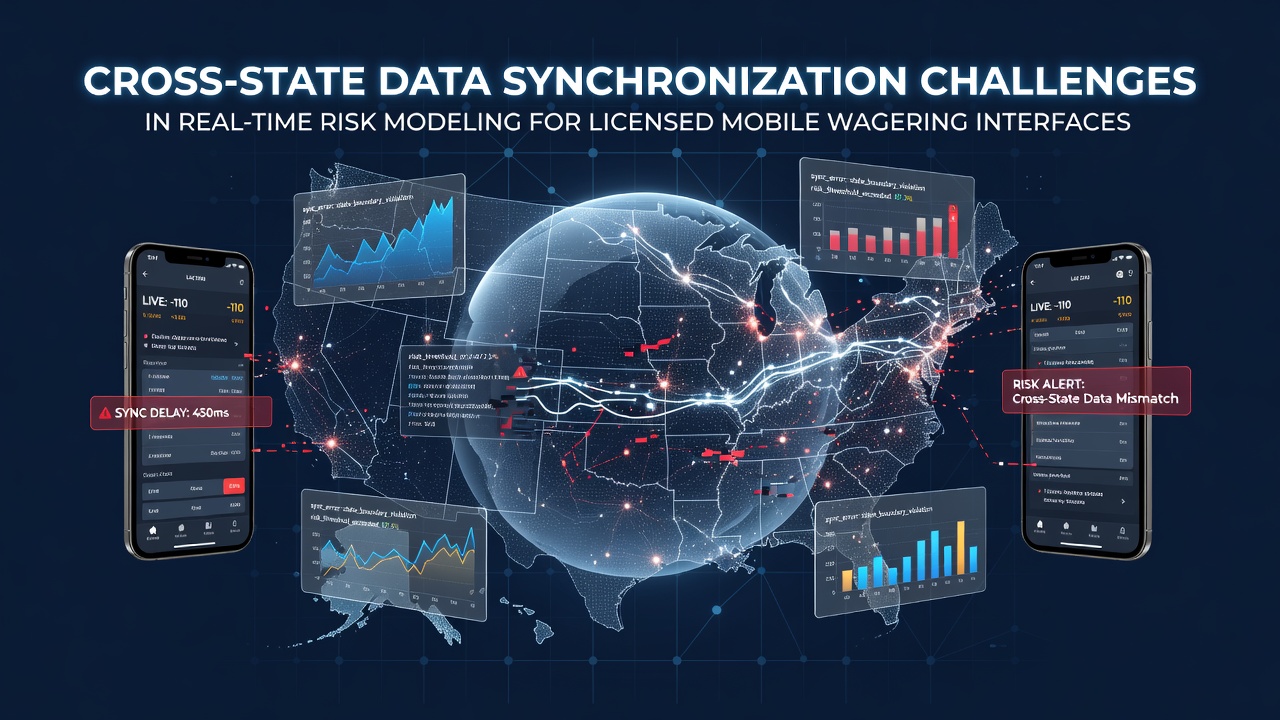
Cross-state data synchronization challenges in real-time risk modeling for licensed mobile wagering interfaces
Cross-state data synchronization challenges arise because licensed mobile wagering operates under separate state regulatory frameworks that restrict how operators share user information and risk signals in real time, and these restrictions create measurable delays when systems attempt to update live betting models across jurisdictions. Operators must maintain separate data environments for each state while still feeding centralized risk engines that calculate exposure on in-play wagers, and the resulting architecture produces latency spikes during peak betting windows.
Regulatory fragmentation and data residency rules
Each state requires operators to store account and transaction records within its borders or with approved in-state processors, which means risk models cannot pull a single unified user profile without triggering compliance checks that add processing steps. Researchers at the University of Nevada, Las Vegas Center for Gaming Research documented these residency requirements in a 2025 analysis that showed average synchronization delays of 180 to 320 milliseconds when models attempted to reconcile activity between New Jersey and Pennsylvania accounts. Those delays matter because real-time risk engines rely on sub-100-millisecond updates to adjust limits or flag potential fraud during live events.
State rules also differ on what constitutes permissible data sharing for responsible gambling interventions, and operators must therefore run parallel compliance filters before any cross-border record exchange occurs. One study published by the National Conference of State Legislatures in early 2026 found that 34 states impose explicit prohibitions on exporting certain behavioral indicators without affirmative user consent or regulatory pre-approval, and these prohibitions force risk systems to operate on incomplete datasets when users move between state lines.
Latency patterns in live risk calculation
Real-time risk modeling depends on continuous ingestion of wager amounts, account balances, and device signals, yet cross-state handoffs introduce variable network hops that compound during high-volume periods. Observers monitoring August 2026 handle data noted that synchronization failures peaked on weekends when multiple states hosted overlapping professional sports events, and several major platforms recorded temporary mismatches between reported exposure and actual liability figures. These mismatches trigger automated circuit breakers that pause new wagers until the underlying data reconciles, and the pauses last anywhere from 12 to 45 seconds depending on the number of states involved.
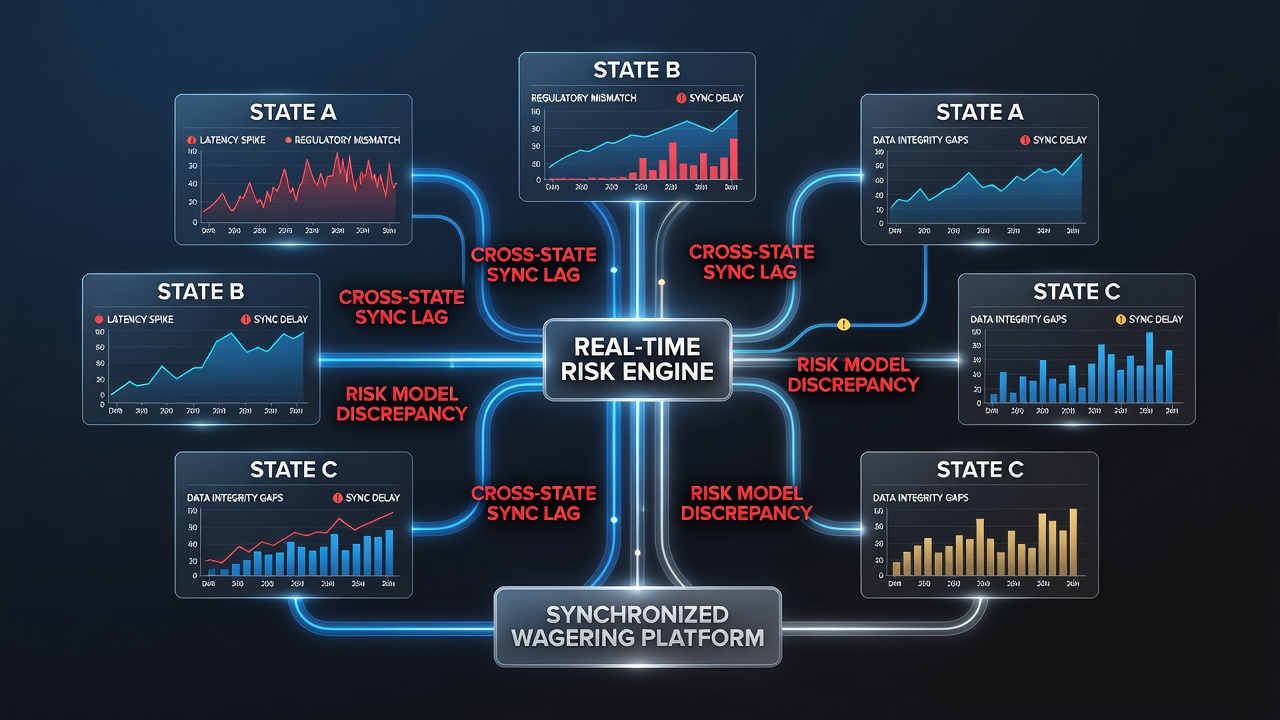
Technicians address some of the latency through edge caching within each state, yet cached values quickly become stale when users place rapid successive bets across different jurisdictions. A technical review issued by the Pennsylvania Gaming Control Board in July 2026 reported that edge caches required refresh intervals no longer than eight seconds to stay within acceptable risk tolerances, and operators that extended those intervals beyond ten seconds experienced measurable increases in unresolved exposure events.
API incompatibility and timestamp alignment
State-approved wagering platforms use proprietary APIs that format timestamps, currency units, and user identifiers differently, and these format differences require translation layers before any risk model can ingest records from multiple states. Translation layers add both computational overhead and potential data corruption points, particularly when states observe daylight-saving changes on different schedules. In August 2026 several operators reported that a one-hour offset between Mountain and Eastern time zones produced duplicate bet records when systems attempted to merge logs from Colorado and New York during an NFL preseason window.
Engineers mitigate some of these issues with standardized schema mapping, yet the mappings must be updated whenever any state modifies its reporting specifications, and those modifications occur several times per year. Data from the American Gaming Association industry compliance tracker indicates that platform teams spent an average of 14 hours per month in 2026 maintaining cross-state mapping tables, and the hours increased when new states entered the market with unique identifier formats.
Impact on automated limit adjustments and fraud detection
Automated betting limit systems rely on aggregated user history to set personalized thresholds, and incomplete cross-state histories lead to either overly conservative limits that reduce handle or overly permissive limits that elevate risk. Fraud detection models encounter similar problems when device fingerprinting data fails to synchronize quickly enough to link activity across state accounts controlled by the same individual. Case records reviewed by analysts at the New Jersey Division of Gaming Enforcement showed that several coordinated wagering patterns in the first half of 2026 went undetected for up to four minutes because synchronization queues were backlogged.
Operators respond by deploying state-specific risk sub-models that operate independently and then reconcile outputs at fixed intervals, but the reconciliation step itself creates a window during which overall exposure calculations remain approximate rather than precise. Those intervals have shortened from 30 seconds in 2024 to roughly 12 seconds in August 2026 as hardware upgrades have been deployed, yet the fundamental constraint of regulatory data separation continues to set a lower bound on achievable precision.
Conclusion
Cross-state data synchronization remains a structural limitation for real-time risk modeling in licensed mobile wagering because regulatory residency rules, API variations, and timestamp inconsistencies prevent instantaneous sharing of user and transaction records. Operators continue to invest in edge caching, schema mapping, and sub-model reconciliation techniques that reduce but do not eliminate the resulting latency and completeness gaps. As additional states authorize mobile wagering, the number of independent data environments grows, and the technical overhead required to maintain synchronized risk calculations scales accordingly.